KForce Security

Author name: IMRAN A KHAN

Vaping Set Off Smoke Alarms
Blog

Does Vaping Set Off Smoke Alarms? Here’s What You Need to Know

Vaping indoors may not appear like a big deal, unlike traditional smoking, because after two or three puffs, the fire alarm deafeningly rings unexpectedly. Being at home, a hotel room, or ain n office building, one can barbecue and vape without panicking because emergency services might disturb you, understanding how smoke detection systems react to vapor perception. Do smoke alarms set off with vapes then? The short answer is yes – in some circumstances, they can. However, this does not always happen where a triggered alarm is concerned, and much of this simply depends on the gas detector, its type, the concentration of the vapor, and the environment that you are in. Do Smoke Detectors Detect Vape? Learning how vaping can influence alarms, it is important to raise the first question: do smoke detectors detect vape? Vape machines do not give out smoke, as they produce an aerosol. This is the aerosol that is made up of glycerin, propylene glycol, and flavor particles. This is more like an air pollutant, but it may look and act like smoke and behave like smoke when sparked off in large puffs. And there are also those detectors that are sensitive to capture such particles as dangerous. A thorough fire risk assessment identifies potential hazards and helps implement effective fire prevention measures. Smoke detectors come in various forms, and sensitivity is one of the important factors. There are various types of Smoke Detectors and how they respond to Vapor Types of Smoke Detectors and Their Response to Vapor Type of Detector How It Works Can It Be Triggered by a Vape? Photoelectric Uses light beams to detect visible particles Yes – highly likely Ionization Detects charged particles from combustion Possibly – moderate risk Heat Measures temperature changes No, not triggered by vapor Advanced Multi-Sensor Combines optical, ion, heat & CO sensors Yes – sensitive environments The most vulnerable ones are photoelectric detectors. What makes them more sensitive to dense vape clouds is the presence of large particles that obstruct a light beam in the chamber. Therefore, whether a vape will set off a fire alarm or not, the answer is more on the affirmative side in case this kind of sensor is within proximity. Ionization alarms are a little more lenient. They depend on the alteration of electric current due to the charged particles of the air-termed ionized particles, which is more frequent with smoke. However, a reaction may also take place in other circumstances despite heavy vaping. On the other hand, can a fire alarm be set off by steam? Yes, in particular optical sensors. Similarly to vape aerosol, steam can shoot a beam of light within a photoelectric detector, resembling the appearance of a smoke or a cloud of smoke. That is why the use of alarms close to the bathrooms is often also steam-sensitive. Why Does Vaping Sometimes Trigger Fire Alarms? The question Does vaping set off smoke alarms sounds complicated because there are a few aspects related to the environment and human behaviors that influence the answer to this question. System control access allows you to manage who enters your premises, enhancing both security and operational efficiency. So, do e-cigs set off smoke alarms? Certainly, particularly when there is the above-stated. Will a Vape Set Off a Fire Alarm in Real Situations? There are many examples in the real world. Hotels have to face guests frequently setting off alarms because of inside vaping. Offices and schools have recorded cases of alarms triggered during breaks in the WCs. Lavatory smoke detectors have been activated even during flights through the use of e-cigarettes. False fire alarms are no laughing matter; it is not a matter of bothering people or interrupting a smooth operation. They may prompt evacuation operations, the sending of emergency agencies unnecessarily, and may even lead to fines and access prohibitions. So, the better question might be: Should you vape indoors at all if a smoke detector is nearby? What About Steam and Other Vapors? As we noted earlier, can a fire alarm be set off by steam? Yes. Indeed, steam produced by a hot shower or the more common kettle can activate the same kind of detector that is activated by vape clouds and particularly optical sensors. This strengthens the fact that it is particle dynamics and density rather than just smoke. In case you think that there is something like safer or safer vaping since it is not a combustion process, then you are half right. Fire protection is a good thing, but the response of the detector does not matter whether the particles are caused by fire, vapor, or steam. How to Avoid Triggering a Smoke Alarm While Vaping In case of a permitted indoor vaping (it is always better to understand the rules out in the first place), there are still things to do to eliminate the risk of a smoke alarm going off: These are not magic steps, and they are effective in pushing marginal cases in one way or another. Installing a modern smoke alarm ensures quick alerts during smoke emergencies, giving you time to act and evacuate. Do Vapes Set Off Smoke Alarms in Commercial Settings? Detection systems can be more advanced in commercial buildings, schools, and airports. Others even feature special vape-detection technology, which can sense any chemical present in the aerosol: nicotine or THC. Not only are these particle-sensitive, they are specifically designed to detect the use of e-cigarettes. And then, yes, once again, do vapes set off smoke alarms in those places? Yes–and they can even cause automatic notification or security measures to be taken, or punishment. Fire alarm installation is essential for ensuring early detection and prompt response in case of a fire emergency. Conclusion Vaping can set off smoke alarms, especially in areas with poor ventilation or highly sensitive detectors. While many assume vapor is harmless, the reality is that dense clouds from e-cigarettes can behave like smoke and trigger alarms. So, do vapes set off smoke

Fire Risk Assessments
Blog

Fire Risk Assessments: A Complete Guide for Landlords & Tenants

Fire on rental premises is not just a big danger in terms of safety, but also a big issue in terms of legal and financial exposure. When you have wondered What is a fire risk assessment, it is a structured procedure of analyzing possible fire risks in a building and their threats to occupants, particularly in a rented-out house. This is an important process that keeps lives safe, property, and legal duty. You are a landlord who has numerous housing units, or you are a resident of a common place of living, in which case, you should know how fire risk assessment operates and what you can do to contribute to it when the assessment is conducted. What Is a Fire Risk Assessment and How Does It Work? What is a fire risk assessment? It entails establishing fire hazards, determining people who could be at risk, gauging the risk level, application of control risks, and re-reviewing the risks. Through this organized mode, landlords strive to make the world safe for their tenants as they satisfy the law. A competent individual, such as the landlord, a specially assigned responsible individual, or a certified candidate, will normally go through the premises, pointing out sources of ignition, flammable substances, blocked escape plans, and pre-existing fire protection. They then record the assessment based on the findings, implying an upgrade or maintenance where necessary. An intruder alarm system enhances security by detecting unauthorized access and instantly alerting homeowners or business owners. What Is the Legal Requirement for Fire Risk Assessments? So, what is the legal requirement for fire risk assessments? The Fire Safety Order 2005, which is a requirement by the UK, provides legal care to landlords of residential premises in terms of performing a fire risk assessment and periodically reviewing the assessment. This refers to purpose-built blocks of flats, houses of multiple occupation (HMOs), and converted buildings. The task and responsibility of carrying out a fire risk assessment. In case of a responsibility concerning a residential building with common areas (such as hallways or stairwells), you are supposed to make sure that there is a written fire risk assessment at hand. New legislation in higher-risk buildings, including those which are above 18 meters, also requires more thorough and frequent assessments to be conducted. Failure to comply might result in fines, nullification of insurance policies, or even criminal lawsuits. Fire authorities are entitled to visit buildings and serve enforcement notices on properties whose standards have not been observed.. Fire Safety Risk Assessment HMO A fire safety risk assessment for HMOs is particularly vital, as there is a high risk due to various tenants staying under a single roof. Individual cooking appliances appear in separate rooms, and communal areas get crowded. The evaluation has to take into account such situations: Fire alarms, extinguishers, fire blankets, and fire-resistant furnishings must be frequently checked and fitted as stipulated by the law. Self-closing fire doors should be FD30 fire-resistant. Fire safety in HMOs is not optional, as this is influenced by the unique risks that exist in these accommodations. Placing a fire extinguisher in key areas of your property can significantly reduce the risk of fire damage and improve emergency response. How Often Fire Risk Assessments Are Reviewed A question often asked by landlords is: How often should fire risk assessments be carried out or reviewed? Although the frequency of assessing it does not have a specific date, it is advised that the assessment should be reviewed at least every two years, and a complete reassessment every four years. However, in the case of such types of changes as building upgrading, alteration of tenant composition, or new pieces of furniture and equipment, an instant correction is needed. Where there is an older property or HMO, it is recommended to conduct reviews annually to maintain face with the safety standards. The regular inspections not only guarantee the ongoing compliance but also prove a proactive attitude towards establishing the safety of the tenants, which could be priceless should any legal bounds or CA claims be raised. Fire Risk Assessment for Flats Conducting a fire risk assessment for flats is slightly more complex due to the nature of multi-unit buildings. Landlords must assess both individual units (where applicable) and all shared areas. These include: In these buildings, Type 1 fire risk assessments are most common. This involves a non-invasive inspection of common areas. However, more in-depth assessments (Types 2–4) might be required if risks are identified or if the property is undergoing refurbishment. Additionally, responsibilities differ slightly depending on whether the property is leasehold, freehold, or managed through a block management company. But regardless of setup, ensuring the safety of all residents through a structured assessment remains non-negotiable. Key Hazards and Preventive Measures Fire risks in residential buildings usually stem from: The preventive measures are the installation of smoke alarms on all the floors, heat sensing in kitchens, and smoke alarms in rooms with fuel-burning equipment. Blankets and fire extinguishers ought to be available, particularly in HMOs. There is also a need that the escape routes should be well-marked and must never be blocked. Landlords ought to make the tenants realize that they can also play a part in the maintenance of these pathways. With smart features like motion detection and cloud storage, home security cameras offer both convenience and peace of mind. Professional Help and Record Keeping Landlords are allowed to complete fire risk assessments themselves, but using a qualified assessor means they can be overlooked. A report will be given in a detailed fashion with pictures, visible grading of risks, and recommended remedial measures by a professional. The documentation must contain: It is also important to ensure these records are kept up to date and accessible, not only so that you are compliant with the law but to maintain trust between you and your tenants and to help ward off future liability. Landlord and Tenant Responsibilities As much as it is the responsibility of the landlords in fire safety,

Fire Alarm Categories
Blog

Understanding Fire Alarm Categories And Fire Alarm Grades

When a fire breaks out, the last thing you want is confusion over your alarm system. Yet many businesses still struggle to choose the right fire alarm category, putting lives, assets, and legal compliance at risk. The British Standard BS 5839 outlines various categories (M, L, P) that define how much protection your building really needs, whether for life safety, property protection, or both. This guide breaks down each category clearly, showing you what fits where and why. So, are you confident your fire alarm system actually matches your risk profile? Grades Vs. Categories –  What’s The Difference? If you want fire alarm installation, you have to remember that the grades and categories do not mean the same thing. Although they usually work together, they are not the same. The technical standard of the system, including the components, power sources, control panels, and reliability, is determined by grades (A to F). Conversely, Categories (M, L1 L5, P1 L2) pertain to coverage level and purpose of the system: life, property or both. Here’s a quick overview of the fire alarm grades: Grade System Description A Central control panel, fire/smoke detectors, alarm sounders, backup power, meets full BS EN 54 standards. C Detectors and sounders with central control, mains powered with standby supply. D1 One or more detectors powered by mains with tamper-proof battery backup. D2 Like D1, but with user-replaceable battery backup. F1 Detectors powered by tamper-proof batteries. F2 Detectors powered by user-replaceable batteries. Fire Alarm Categories Overview- BS 5839 Part 1 The categories of fire alarm systems are laid out by the British Standard BS 5839 Part 1, which regulates the use of fire detection and alarm systems in non-domestic facilities.  What are L1, L2 L3 fire alarm systems, and what about the M and P categories? The three main types of categories are arranged according to the purpose of the system, which includes manual operation, life safety, and property protection. Category M- Manual System The simplest form of a system. No auto detection, the alarms are set manually via break-glass call points or bells. Typically, they are installed in small, low-content buildings that have continuous occupancy, such as kiosks or single-room shops. Category L1- Maximum Life Protection The L1 fire alarm system requirements include automatic fire detectors installed throughout the entire building, including all rooms, corridors, voids, roof spaces, and cupboard areas. Consider this option if you want a fire alarm system for homes, hospitals, and hotels where early warning is paramount. Category L2- Additional Life Protection L2 systems also protect within escape routes and high hazard zones, e.g., kitchen or plant rooms. It is appropriate in medium-sized buildings where fire hazards are known and prior warning can prevent deaths. Category L3- Standard Life Protection L3 focuses on early detection in escape routes and all rooms opening onto them, ensuring occupants have time to evacuate safely. This is the most widely used category in schools, offices, and multi-level commercial buildings. Category L4- Modest Life Protection It can only be detected in typical escape halls, stairways, corridors, and halls. Best suited to small, ground-floor offices or low-risk areas, where occupants can vacate rapidly without extra alerts at the room level. Category L5- Localised Life Protection A tailored solution that is deployed to special high-risk areas like server rooms, welding bays, or labs. They are often combined with another category (L3 or L4) to provide focused protection where it is needed most. Category P1- Maximum Property Protection P1 systems offer total automatic detection cover and are designed to serve business continuation and asset preservation purposes. They play a crucial role in settings such as data centres, museums, and utility control rooms, where it is paramount to prevent property damage. Category P2- Partial Property Protection P2 systems install detectors only in areas of high risk or high value, offering a cost-effective solution for businesses looking to protect specific zones without full-building coverage. Often used in warehouses, archives, or critical machinery rooms. How To Choose The Right Fire Alarm Category  The first step towards selecting the correct category of fire alarm is through a thorough Fire Risk Assessment, which is a legal requirement under UK fire safety law.  The layout of your building, the type of occupancy, the arrangement of escape routes, the activities you carry out, and high-risk areas should be considered during this assessment.  The right category depends on what you’re protecting: life, property, or both. Many businesses use a combination of categories to suit different needs; for instance, a company might implement a Category L4 system for general life safety coverage, alongside L5 detectors in high-risk areas like a server room.  For continuous protection, especially outside business hours, it’s advisable to link your system to an Alarm Receiving Centre (ARC), which ensures immediate alerts to emergency services and keyholders. Final Thoughts Understanding fire alarm categories is essential for creating a safe environment, whether you’re focused on life safety, property protection, or both. A proper system not only helps meet legal requirements but also ensures early detection, smoother evacuation, and reduced damage. Since every building has unique risks, selecting the right category often means blending multiple systems for complete coverage. For expert help designing and maintaining the right setup for your premises, get in touch with KForce Security, the best fire alarm installer company in the UK.

Smoke Alarm Beeping
Blog

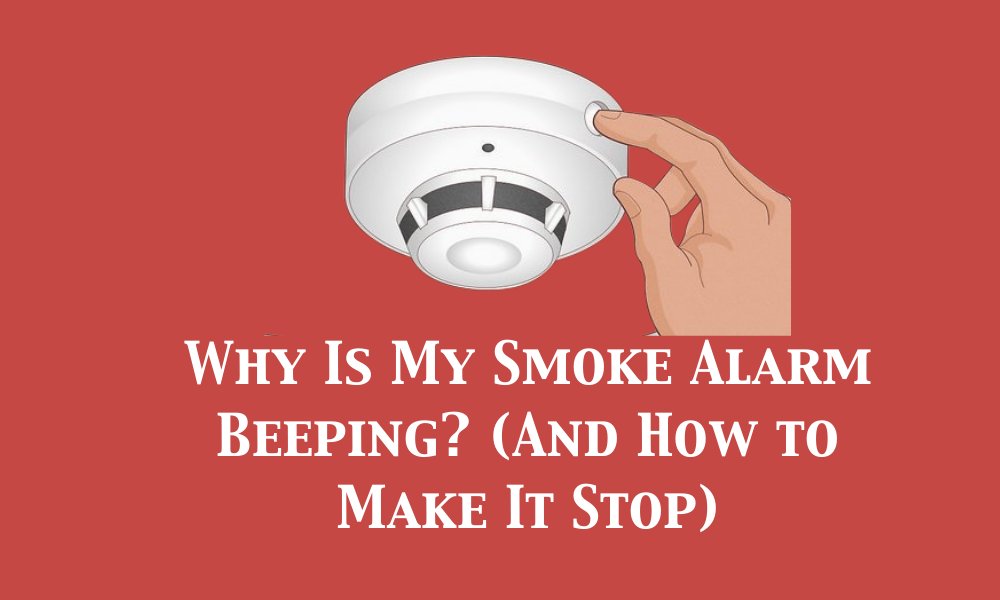
Why Is My Smoke Alarm Beeping? (And How to Make It Stop)

It is 2 AM, the home is silent, and as you are drifting to a sweet slumber, you hear that same familiar chirp of the high note. You attempt to shove it out of your head, and yet there it is every 30 seconds on the nose. You are not the only one who has ever experienced this. The unpleasant noise is not only there to bother you during your sleep, but it is also trying to inform you about something important. So what is your alarm telling you to do? The fact is, a smoke alarm that beeps does not necessarily indicate that there is danger. An occasional beep of a smoke detector using a new battery may indicate a slight problem that requires correction before it becomes too late. Battery-related, environment-related, or electrical-related, knowing the cause can guide you to the solution to the problem and make your home peaceful again. What Causes Smoke Alarms to Beep Intermittently? When a smoke alarm keeps beeping intermittently, the possible cause is the presence of a low or dead battery. But that is just part of the iceberg. Reason number three, your alarm may also chirp because: These beeps in between are a reminder from your smoke alarm to check up. Even a smoke detector is beeping with a new batterythat is possible that there is something wrong going on. A reliable smoke detector is your first line of defense against fire hazards in homes and commercial spaces. Why Do Smoke Alarms Beep at Night? It is the case of many that they observe their smoke detector beep in the wee hours of the night. This is not by accident. Batteries are temperature sensitive, and colder air at night could cause the battery voltage to drift low enough that it causes a warning chirp to sound. That’s why a smoke detector beeping with a new battery always seems to become a problem at the worst possible hour. Ignoring nighttime chirps can lead to sleep deprivation and frustration, but more importantly, it could mean your smoke alarm won’t function when you need it most. How to Stop the Beeping: A Step-by-Step Fix Replace the Battery Again (Even if It’s New) Sometimes, even the new batteries can malfunction or discharge fast. You should make sure that you are making use of the specified battery type, which is typically a 9V or an AA lithium, and that it is placed with the correct polarity. Push the battery hard onto the place where it joins well with the terminals. The most frequent reason for constant beeping is the improper battery placement. Perform a Reset Once the battery is replaced, firmly press and hold the test button, or reset button on the alarm between 15 seconds and 20 seconds. This operation removes any remaining electrical charge or internal memory error that might cause a false beep. Such alarms need this identify a new battery. Remount the unit after waiting to hear a confirmation beep or flash of light. Clean the Alarm The alarm can be interfered with by dust, cobwebs, or other insects who enter it and break into the smoke-sensing chamber. Clean the unit with a soft vacuum brush attachment or a can of compressed air; be careful, especially on catching the sensor vents. Frequent cleaning will then result in the device functioning and lessen the probability of false or random chirping. Filthy alarms tend to confuse particles as smoke. Check the Alarm’s Age Every smoke alarm will print a manufacturer or expiration date on the back of the smoke alarm. Your alarm can beep when its useful life is over, especially when it is more than 7-10 years. Malfunctions of alarms because of aging can occur independently of the state of the batteries. When our experience is like this then the only solution is to change the whole device to a new one. Is It a Hardwired Alarm? A smoke alarm beeping hard wired into the power system of your home is one more level of troubleshooting issues. Backup batteries in these units tend to chirp even when low, too. Further, they may beep: To reset a hardwired unit, one should turn off the circuit breaker, remove unit, take it out of the wiring harness, and hold the reset button. In case the beeping persists despite reinstalling with a new backup battery, then something neurological may be happening so a professional is needed. Our system control access services provide real-time monitoring and restricted access to enhance overall safety and efficiency. Environmental Factors That Trigger Beeping In other cases, the problem is not internal but within the surrounding space of the alarm. The alarm can go awry with excess steam in a bathroom, or even cooking/kitchen fumes nearby or even a dusty attic. Alarms that operate inside HVAC vents or windows can also suffer sudden air drafts that resemble smoke particles. If your smoke alarm keeps beeping after changing the battery and the unit is clean and new, the problem might not be the device itself; relocating it away from these trigger zones can often solve the issue. Conducting a thorough fire risk assessment helps identify potential hazards and ensures compliance with safety regulations. Quick Troubleshooting Table Symptom Likely Cause Solution every 30-60 seconds Low battery Replace with a fresh battery Beeping at night only Cold air lowers battery voltage Replace the battery, and move away from the vents Chirping after battery change Sensor or internal memory issue Reset the alarm, clean the unit Constant beeping (not chirping) Smoke, steam, or wiring fault Investigate surroundings, check wiring Chirping continues for hours Alarm is expired Replace with a new unit Preventing Future Beeping Issues You can avoid the frustration of false alarms and nighttime chirps by incorporating a few regular habits: These small steps go a long way in ensuring your smoke alarms protect your home without driving you crazy. Still Beeping? When to Call a Professional When your smoke alarm keep beeping  after changed

Fire Extinguishers
Blog

A Simple Guide On Colours Of Different Fire Extinguishers In the UK

Fire breaks out, and you take the wrong decision? It can be life-threatening. In the UK, the fire extinguishers are of different colors such as blue, black, cream, red, and yellow. So, you have a chance to make the right decision considering the color psyche. These colors are not just the labels; they are a fast, life-saving guide that helps prevent the spread of fire and reduce harm. But what exactly do these colours represent, and how do you choose the right one when it matters most? Why Fire Extinguishers Are Colour Coded The colour of fire extinguishers UK is important when you want to quickly identify the right type in an emergency. On the other hand, if you choose the wrong one, it may worsen the situation. Therefore, UK standards require extinguishers to be clearly labelled, mounted at a visible height, and paired with proper signage. Before 1997, extinguishers were fully painted in their identifying colour, but this changed to ‘Signal Red’ with coloured bands for better visibility and standardisation. Red is not only linked with danger but also stands out in smoky conditions. This system helps reduce confusion, speeds up response, and supports legal compliance. At-A-Glance Chart- Colours And Uses Of Fire Extinguishers Fire extinguishers in the UK are available in red colour, but each type has a colour-coded label that instantly identifies its intended use.  Colour Extinguisher Type Suitable for Fire Classes Common Environments Red Water / Water Mist Class A / A, B, C, F Offices, schools, hospitals, homes Cream Foam (AFFF) Class A, B Homes, petrol stations, commercial spaces Blue Dry Powder (ABC / D) Class A, B, C, D, Electrical Workshops, garages, welding zones Black Carbon Dioxide (CO₂) Class B, Electrical Server rooms, offices, kitchens Yellow Wet Chemical Class F, A Commercial kitchens, restaurants Fire Extinguisher Types By Colour Code Understanding the kind and type of fire extinguisher is crucial. Each colour band identifies the extinguisher’s contents and the fire classes it’s designed to tackle. Fire extinguishers are coded by the following colours: Red- Water Fire Extinguisher Red-labelled extinguishers contain water and are most effective against Class A fires, which involve combustible materials like paper, fabric, wood, and cardboard. Red fire extinguishers are used for schools, offices, libraries, and other environments where such materials are present.  They can also be called Water fire extinguishers that work by cooling the burning material and soaking it, removing heat from the fire triangle, and preventing re-ignition. However, they must never be used on fires involving flammable liquids, gases, or electrical equipment due to the risk of electrocution or spreading the flames. A modern variant, the Water Mist extinguisher, also falls under the red category. It discharges a fine spray of demineralised water particles, making it safer for wider usage, including Class B, C, and even low-voltage electrical fires, without leaving any residue. Cream- Foam Fire Extinguisher (AFFF) Foam extinguishers are marked with a cream label and are suitable for Class A and Class B fires. That includes fires started by everyday materials like paper or fabric, as well as flammable liquids such as petrol, diesel, and solvents.  Foam suppresses fires by forming a blanket over the burning liquid surface, cutting off oxygen while also cooling the material beneath. If talking about their use, they can be used in office blocks, warehouses, petrol stations, and other commercial spaces. However, avoid using them on electrical or kitchen fires due to their water-based formula. While effective, foam extinguishers can leave a residue that may require clean-up after use. Blue- Dry Powder Fire Extinguisher Blue-labelled extinguishers contain dry chemical powder and are often referred to as “ABC extinguishers” due to their versatility. Blue fire extinguisher used for Class A (solid combustibles), Class B (flammable liquids), and Class C (flammable gases) fires, as well as electrical fires involving voltages up to 1000 volts.  These extinguishers work by interrupting the chemical reaction of the fire, forming a powder barrier that suffocates the flame. Specialist variants are available for Class D fires, which involve reactive metals like magnesium or aluminium. However, dry powder is not recommended for enclosed or poorly ventilated spaces as the fine particles can be easily inhaled, and the residue is difficult to clean. You’ll typically find these in workshops, industrial units, and fuel storage areas. Black- Carbon Dioxide (CO₂) Fire Extinguisher CO₂ extinguishers carry a black label and are specifically designed for fires involving flammable liquids and electrical equipment. A black fire extinguisher is used for displacing the oxygen around the fire, essentially suffocating the flames without causing any damage to electronics. This makes them ideal for use in offices, server rooms, and kitchens with powered appliances.  Although they do not leave any mess, you can use them where cleanliness and equipment preservation are crucial. However, they are not effective on fires involving combustible solids such as wood or textiles and should never be used on oil-based kitchen fires. Yellow- Wet Chemical Fire Extinguisher Wet chemical extinguishers are identified by a yellow label and are designed to handle Class F fires, those involving cooking oils and fats. These fires typically occur in commercial kitchens, restaurants, and food preparation areas where deep fat fryers are used.  The extinguisher releases a fine, soapy chemical mist that forms a seal over the surface of the hot oil, stopping the flow of oxygen and cooling the liquid to prevent re-ignition. While wet chemical extinguishers can also be used on Class A fires, they cannot be used as electrical fire extinguishers and are not suitable for gas or flammable liquid fires.  Conclusion Fire extinguisher colours and types are essential for safe and effective fire response. Each extinguisher is designed for specific fire risks, and choosing the wrong one can be dangerous. At KForce Security, we emphasise proper training and regular maintenance to ensure your fire safety equipment is always ready. Need expert guidance or a site survey? Our certified team is here to help.

fire safety sign
Blog

Fire Safety Signs Guide- What They Mean And Where To Use Them (UK Law 2025)

Many people think fires don’t happen often, but that’s not true. In the year ending September 2022, fire services in England responded to 185,437 fires. These included 27,202 house fires and 3,695 fires in other buildings. Sadly, 276 people died and 6,098 were injured. These numbers show that fires can happen in any building, which is why it’s so important to have the right fire safety measures in place. Every business needs at least two or three fire safety signs. But choosing the right signs and knowing where to place them can be confusing. That’s why these signs are not just useful,  they are required by law in the UK. Fire safety signs give clear instructions, help people find exits and equipment, and reduce panic during emergencies. From green exit signs to red fire extinguisher labels, each one plays an important role in keeping people safe. So, have you checked if your signs meet the right standards? Why Are Fire Safety Signs Important? In a fire emergency, clear communication can be the difference between a smooth evacuation and a chaotic one. Fire safety signs serve as a universal language, giving people instant visual instructions, even if they are unfamiliar with the building or the local language. Whether it’s guiding people toward the nearest exit or showing where to find a fire extinguisher, these signs ensure everyone has a better chance of acting quickly and safely. But fire safety signs aren’t just practical, they are a legal obligation. If you are responsible for any type of commercial space, you are required by law to install the appropriate signage based on your building’s layout and level of fire risk. About UK Fire Safety Sign Regulations There are two main laws governing fire safety signs in the UK: The RRO is the central piece of legislation that brings together fire safety requirements for commercial premises, including the need for signs. Meanwhile, the 1996 regulations focus specifically on the use, appearance, and purpose of safety signage in workplaces and public buildings. These laws make it clear: if a risk can’t be eliminated, it must be clearly signposted. Fire signage must meet design and visibility standards, be well-positioned, and be understood by anyone who might enter the premises. Detailed Breakdown of Essential Fire Safety Sign Types (As per UK Law) Understanding the different types of fire safety signs and their purposes is key to maintaining a safe environment, and complying with legislation. 1. Fire Action Notices These notices tell people exactly what to do if they discover a fire or hear the alarm. Typically placed next to fire alarm call points and final exits, they include key instructions such as: All commercial premises must display Fire Action Notices. The best practice is to install them wherever an alarm or call point exists to ensure visibility during an emergency. 2. Fire Exit Routes, Doors, and Assembly Points Fire Exit Signs: These are signs that normally have a person running and an arrow and its color is usually green in color and it indicates the means of exiting a building. The situation is different in small shops where clear signs of the out passage may do without exit signs. However in bigger or complicated space, directional signs are necessary. Fire Exit Doors: A blue sign label should be compulsory on each fire exit door like “Fire Door Keep Shut.” There are also other doors that might need operating instructions, where the doors automatically open or even the push bar type. Fire Assembly Points: These signs assist people to get together after evacuation at a safe distance of the building. They must be well labeled and visible to all residents including persons with mobility requirements. 3. Fire Equipment Signs Quick access to the right equipment can stop a small fire from escalating. That’s why fire extinguishers, hose reels, dry risers, and fire alarm call-points all need to be marked with red signs. All signs must be placed at eye level, remain unobstructed, and be easy to read in low light, often using photo-luminescent materials to remain visible during power cuts. 4. Warning and Prohibition Signs These signs manage fire risks by telling people where hazards exist and what actions are restricted. Warning Signs: Usually yellow and black, triangular in shape, these are used to alert people to dangerous substances, such as gas or highly flamable liquids. Prohibition Signs: Circular with a red slash, they are designed to stop unsafe behavior. Common examples include “No Smoking” signs in areas with a fire risk. Often, these are combined with warning signs for extra clarity. Staying Compliant- What You Should Do To make sure your business complies: Final Word Fire safety signs aren’t just stickers on a wall, they are silent protectors, ready to guide people to safety in the most critical moments. Knowing where to go, what to do, and what to avoid could mean the difference between confusion and control. So, the question is: are your signs ready when it really matters?

security system
Blog

Does Your Security System Work During A Power Outage?

It’s late, the wind is howling, and suddenly, everything goes dark. No lights, no Wi-Fi, and a chilling silence where your home security system used to be. So, does your security system still work during a power cut? In most cases, Yes! But it depends heavily on the type of system you have and how it’s set up.  From backup batteries to cellular failovers, today’s security setups are smarter than ever, but they’re not all created equal. Some will stay fully functional without blinking, while others might leave you exposed the moment your router dies. Knowing which system you rely on, and how it responds during a blackout, could make all the difference. But what if the system you trust the most is also the one most likely to fail when the lights go out? Why Power Cuts Can Put Your Home At Risk Power outages are not only a nuisance they are an opportunity ready to be exercised by anyone. A completely dark street signals vulnerability, especially when people assume their alarm is still doing its job. Sadly, it is not always so. Security systems in the modern world depend on various forms of power, different forms of communication, and some that just do not respond to outages all that well. In case your Wi-Fi router fails, or you have no good backup, you might be vulnerable during the worst period of time. And while it’s rare, intruders are aware that a power cut could leave certain homes exposed. A power outage, whether due to a storm or a scheduled maintenance or even deliberate sabotage can cause enough confusion to slow response or detection. How Different Systems React During A Power Cut Security systems are not created equal and familiarizing yourself with the distinction can be the key to being prepared. Landline-Based Systems Communication between these systems is by use of ancient telephone lines. They continue to operate even when power fails as long as there is telephone network in place. A large proportion is supported by a battery powered control panel, enabling up to 24 hours of operation. They are straightforward and efficient, yet increasingly rare in contemporary households. Cellular Systems They are currently regarded as the most enduring. They do not require Wi-Fi and will still use mobile networks. Most current systems have cellular backup as their default when the main connection becomes unavailable. All you need to do is make sure that the internal battery of the system is charged since without electricity, even a good signal can not help. Wi-Fi or Ethernet Systems These systems are the most common, but they also come with the biggest risk during an outage. If your router loses power, your security system may disconnect from the monitoring center or your mobile app. The devices might still be powered, but if they can’t send signals, they’re as good as silent. VoIP Systems The voice-over-IP systems depend on power as well as the internet. They typically have a backup battery, but when the power and the internet go out, the connection is broken. Such systems typically involve particular configurations or supplements to enable them to cope with power outages. What Happens If Your Alarm Goes Off During A Power Cut? You’re not imagining things, alarms sometimes sound for no reason during a blackout. But it’s not a burglar setting them off , it’s usually the system itself reacting to a fault. When your control panel begins to beep or whine, this is usually due to the battery being dead, defective, or unhooked. There are systems that would alert by beeping. Misinterpretation of a fault as a breach can cause others to activate a full siren. In rare cases, motion sensors can glitch when the system loses stability, sending false alerts to your monitoring center. This is not normal. A correctly functioning system must go to battery mode without disturbance and continue to keep monitoring. How Long Will A Backup Battery Last? The answer depends on your system. Basic panels can last 12 to 24 hours on battery power. Some modern models are more efficient, while others, especially those with live video, drain power faster. Ring, SimpliSafe, and Arlo all have systems with battery backup availability, and others may provide cellular failover as part of a subscription. This implies that even when your Wi-Fi loses the connection, the system may still inform you or the authorities through the mobile data, at a fee. A UPS (Uninterrupted Power Supply) may also be installed in your Wi-Fi router. It is a little plug-in device that activates when power has gone down to allow your router a couple more hours to remain online. How Different Systems React During a Power Cut System Type Stays On During Power Cut? Backup Method Key Risks Landline Yes (if phone line is live) Battery-powered panel Phone lines may be damaged Cellular Yes Cellular network + battery Battery drain over time Wi-Fi / Ethernet Not always Battery (devices) only Router goes offline VoIP Not always Limited battery support Loses connection if internet is out Final Thoughts Your security system should not turn silent when the lights are off. Be it Wi-Fi, cellular or landlines, the correct back-up system can prove invaluable in ensuring that your home remains safe and secure. Power cuts are unpredictable, but your response doesn’t have to be. The real question is: is your system ready for the next one?

8 benefit of fire safety
Blog

8 Benefits Of Fire Safety Training For Employees

A fire emergency rarely sends a warning, but its damage can be instant, overwhelming, and irreversible. In most workplaces, employees are not prepared, uninformed and do not know how to act during those critical situation. This is where fire safety training comes to play. Fire safety training equips employees with the knowledge, confidence, and instinct to act quickly, evacuate calmly, and potentially stop small incidents from becoming life-threatening disasters. However, what are the actual, quantifiable advantages of fire safety training in the workplace and why are they more relevant than ever? Benefits Of Fire Safety Training For Employees  1. Saves Lives and Minimises Panic Every second is crucial when there is a fire. Among the most crucial advantages of the fire safety training is that as a result of the training, employees will be able to save the lives of others, by approaching the situation strictly under control, with speed. From identifying the sound of an alarm to following the correct evacuation path, trained employees can prevent chaos and ensure orderly exits. It is not all about knowing the location of the exits–it is about knowing the danger, being able to identify the signs of potential threat early on and being firm in action when things go wrong. Training of the employees would make the working environment more adaptive to take up the emergency. 2. Reduces Property and Equipment Damage In the blink of an eye fire can destroy a company and take with it a fortune but the right action can save even the slightest ordeal so as to turn into a blaze. The training on fire safety involves educating employees on the correct procedure of using an extinguisher, turning off power sources or suppress early flames using fire blankets or fire alarms. Consider a small electrical fire breaking out in a server room, an employee trained in fire safety can act swiftly to contain the blaze, potentially saving millions in data and equipment. Without training, that same fire could spread unchecked until the damage becomes irreparable. 3. Boosts Legal Compliance and Avoids Penalties Employers have a legal obligation under frameworks like the Regulatory Reform (Fire Safety) Order 2005 to provide fire safety training. Non-compliance can result in steep penalties, legal liability, and operational shutdowns. Regular training and documented safety drills help businesses stay aligned with national fire safety standards, reducing risk and showing due diligence to authorities. Training also ensures all employees understand their responsibilities in maintaining safety protocols. Fire marshals, for example, are trained to lead evacuations and manage firefighting equipment, critical roles in high-risk environments like factories, warehouses, or hospitals. 4. Improves Emergency Preparedness and Coordination Fire emergencies require more than individual action, they demand teamwork. Fire safety training programs often include simulated drills, role-playing exercises, and evacuation rehearsals that foster collaboration. Employees learn how to work together, communicate clearly, and assist others during stressful situations. This preparedness leads to faster response times, better use of available equipment, and smoother evacuations. More importantly, it reduces confusion and hesitation, two of the biggest risks in fire emergencies. 5. Builds Employee Confidence and Reduces Anxiety A safe employee is a productive one. Fire safety training instills confidence by helping staff feel prepared to handle emergencies. This directly improves morale, reduces stress levels, and builds a sense of control in what would otherwise be chaotic scenarios. When employees trust their environment, they’re more focused, motivated, and engaged in their roles. And for businesses, that translates to better productivity and a healthier work culture. 6. Protects Business Continuity and Reputation Fires don’t just destroy buildings, they disrupt operations, erode customer trust, and affect long-term profitability. By investing in fire safety training, businesses show a proactive commitment to the wellbeing of their people and premises. This not only safeguards operations but also enhances corporate reputation. Clients, investors, and regulators are more inclined to trust a company that takes safety seriously. In some industries, robust fire safety protocols are even a competitive advantage. 7. Reduces Insurance Costs Many insurers view fire safety training as a preventive investment that lowers risk. As a result, companies that actively train employees, conduct regular drills, and maintain updated fire equipment often qualify for reduced insurance premiums. It’s a financial benefit that goes beyond damage control, proving that prevention is not just safer, but also smarter. 8. Encourages Safer Daily Habits Beyond emergency response, fire safety training teaches employees how to identify and eliminate common hazards before they turn into threats. This might include: These habits, when adopted at scale, make fire prevention part of the company culture. It creates a shared responsibility where everyone plays a part in keeping the workplace safe. Final Thoughts Workplace fire safety training isn’t just about ticking boxes, it’s a foundational practice that saves lives, protects your people, and strengthens the core of your business. From legal compliance to operational continuity and employee confidence, the benefits are widespread and long-lasting. When safety becomes second nature, your workplace becomes stronger, smarter, and significantly more secure.

active & passive fire
Blog

Active And Passive Fire Protection- What Is The Difference

When a fire breaks out, every second matters, and what you have in place beforehand could be the difference between safety and disaster. Most people think of fire protection as just sprinklers or alarms, but that’s only half the story. In reality, fire safety systems fall into two main categories: active and passive protection, and both play critical roles in safeguarding lives and property. Active systems detect and respond to fire, while passive ones are built into the structure to contain and slow its spread. But how exactly do they work together, and why is it dangerous to rely on just one? What Is Active Fire Protection? Active fire protection (AFP) is any system or device where action is taken responding to fire either automatically or manually. Such measures might include as basic as a smoke detector setting off an alarm or as complicated as a sprinkler system going into effect after a heater detects a trigger. The main feature of active fire protection is the instant response. Upon sensing a fire, the system initiates to either fight the fire or respond to occupants or aid in the escape of people. Common Types of Active Fire Protection Systems: Fire Detection Systems: These are the smoke detectors, the heat detectors and the flame detectors. Their main duty is to detect the situation of fire and alert early. Fire Alarm Systems: Alarms give both audio and visual signals, which makes occupants very fast in being alerted and evacuation is possible. Sprinkler Systems: Sprinklers have become a standard part of fire safety in current ages; sprinklers automatically release water upon exposure to high heat. They are very effective in restraining the spread of fire during its initiation period. Fire Extinguishers: Among the most recognizable types of active fire protection, extinguishers need to be manually activated. When properly used, they can extinguish small fires as they happen. Emergency Lighting and Exit Signs: In case of power failure or low visibility due to smoke, emergency lights guide occupants to safety. Some are battery-powered or photoluminescent and activate during emergencies. Smoke Ventilation Systems: Such systems clear the halls and stairwells of smoke and leave a way of escape open during evacuation. What Is Passive Fire Protection? Passive fire protection (PFP), on the other hand, is the unseen shield of a building. It includes in-built structural features that aid in containment of fire, inhibition of its spread, and the integrity of the building. In contrast to active systems, passive systems do not require an activation trigger, because they are always designed to be in state. These are usually built in measures and needed to buy time during a fire situation. The passive systems contribute to keeping fire and smoke under control, providing safe evacuation and minimising the extent of damage to property. Examples of Passive Fire Protection: Fire Doors: Fire doors specially designed to resist fire in a specified time frame, self closing, and commonly used with intumescent seals, which swell in the heat to close door gaps and delay the conduct of smoke and flames. Compartmentation: In this approach, a building is subdivided into fire-resistant areas. These compartments limit the spread of fire to a section, providing individuals more time to get out and firefighters more control in their response. Fire and Smoke Dampers: These dampers have been installed in HVAC systems, and they close due to the presence of a fire in order to limit the spread of smoke and flame through ductwork. Intumescent Coatings: Applied to steel structures, these coatings expand when exposed to high temperatures, forming an insulating layer that protects the steel from failing due to heat exposure. Fire Stopping and Sealing: Gaps around pipes, cables, or ducts in walls or floors can become invisible fire pathways. Fire stopping uses fire-resistant materials to seal these gaps, preserving the integrity of fire-rated walls and ceilings. Key Differences Between Active And Passive Fire Protection Though both are critical to fire safety, they serve distinct but complementary purposes: Feature Active Fire Protection Passive Fire Protection Function Detects and suppresses fire Slows and contains fire spread Activation Requires a trigger (manual or auto) Always “on” once installed Examples Alarms, sprinklers, extinguishers Fire doors, compartmentation, coatings Maintenance Requires testing & servicing Requires inspection for integrity Why You Need Both Systems Working Together A matter of active or passive systems is not a matter of choosing, they are two halves of one full fire protection strategy. Consider a situation when a warehouse catches fire. The smoke sensors ring an alarm (active), the sprinklers try to extinguish the fire (active), but the fire is there and still spreading. Here, fire doors and compartment walls (passive) help slow the progression, giving staff time to evacuate and the fire brigade a chance to control the blaze before it escalates. If either system is missing or malfunctioning, the outcome can be catastrophic. For example, frozen sprinkler pipes might leave you depending entirely on passive barriers. Or, if fire-stopping seals were damaged during a renovation and not replaced, smoke can spread even with perfectly working alarms. Effectively installed, active and passive methods provide the maximum time to respond, the least damage, and safeguard lives. Final Thoughts Active and passive fire protection systems are not competitors- they are collaborators. One is reactionary, acting in the crisis hour; the other constructs principles of resilience into the construction itself. Combined, they create a strong defensive wall that no contemporary structure can afford to be without. Understanding how each system works, and ensuring both are installed and maintained by certified professionals, is essential to effective fire safety. Whether you’re designing a new building or upgrading an existing one, integrating both systems is not just smart, it’s necessary.

fir extinguisher
Blog

Fire Extinguishers Types And Their Uses- A Guide To Using The Right Class

No single extinguisher can be used to tackle every fire, and because each type of fire extinguisher has different categories of fire on which it is effective, selection can be a minefield. In an emergency, choosing the right extinguisher could be the difference between a minor incident and a full-scale disaster. Different fires, from electrical faults to burning oils or flammable liquids, each require a specific type of extinguisher.  That is why it is so important to learn about the types of fire extinguishers, their uses, and their application to feel secure at home, at work, or on the road. Main Types Of Fire Extinguishers 1. Water Extinguishers (Red Label) Best for: Class A fires The most common and affordable are water extinguishers. They are used to cool burning materials and are suitable in offices, schools, and homes. It can be found as a spray or as a jet, with some models having additives to enhance performance. Yet, they must not be applied to flammable liquids, electrical fires, or cooking oil fires, as this can transfer or intensify flames. 2. Water Mist Extinguishers (White + Red Label) Best for: Class A, B, C, F, and electrical fires under 1000V Water mist extinguishers are more recent, eco-friendly types that spray it out with fine demineralized water. This fine spray chokes the fire, as well as cools it at the same time. They are friendly to sensitive machines and are usually installed in hospitals, museums, and mixed fire hazard homes. Due to their versatility, it does not require having many types of extinguishers within a given area. 3. Foam Extinguishers (Cream Label) Best for: Class A and B fires Foam extinguishers can be used against solid and flammable liquids. The foam creates a blanket, which covers the fire and blocks further ignition. Commonly used in petrol stations, workshops, and garages, some models are tested for electrical fires if discharged from a safe distance. They do, however, leave a sticky residue that requires cleaning. 4. Carbon Dioxide (CO2) Extinguishers (Black Label) Best for: Class B fires and Electrical Fires The principle behind CO2 extinguishers is to replace oxygen and prevent the combustion of the fire. They do not leave any residue and are suitable to use in server rooms, electrical panels, and offices. They also have a limited discharge radius, do not produce a cooling effect, and may be hazardous in tight or poorly ventilated areas because of the risk of asphyxiation. 5. Dry Powder Extinguishers (Blue Label) Best for: Class A, B, and C fires and Electrical Equipment Dry extinguishers are versatile and potent. They break the chemical chain of a fire and create a crust that chokes the fire. They are applicable to vehicles, warehouses, and outdoors; well-suited where various types of fire could take place. They, however, cannot be used in closed spaces because the powder may affect visibility and is toxic on inhalation. Specialist Dry Powder (for Class D) In the case of combustible metals such as lithium, magnesium, and aluminum, only the specialist Class D dry powder extinguishers must be employed. They normally appear in an industrial or manufacturing environment and should be handled with caution based on the manufacturer’s specifications. 6. Wet Chemical Extinguishers (Yellow Label) Best for: Class F fires (cooking oils) and Class A fires Wet chemical extinguishers contain a potassium-based solution that reacts with hot cooking oils to form a foam-like layer. Not only does this put out the fire, but it also cools the oil to prevent reignition. Commercial kitchens, restaurants, and food trucks require these extinguishers. Some are also rated for Class A fires, offering added versatility. Final Thoughts With rising incidents of electrical faults, lithium-ion battery fires, and kitchen accidents, the role of portable fire extinguishers has become more crucial than ever. It is not only a matter of possessing one but also a matter of knowing which one to use and how, and when. From understanding fire classes to knowing colour codes, a little awareness goes a long way in fire prevention and response. So before the unexpected happens, ask yourself: Does your space have the right extinguisher for the risks it faces?

Call Now Button