KForce Security

Author name: IMRAN A KHAN

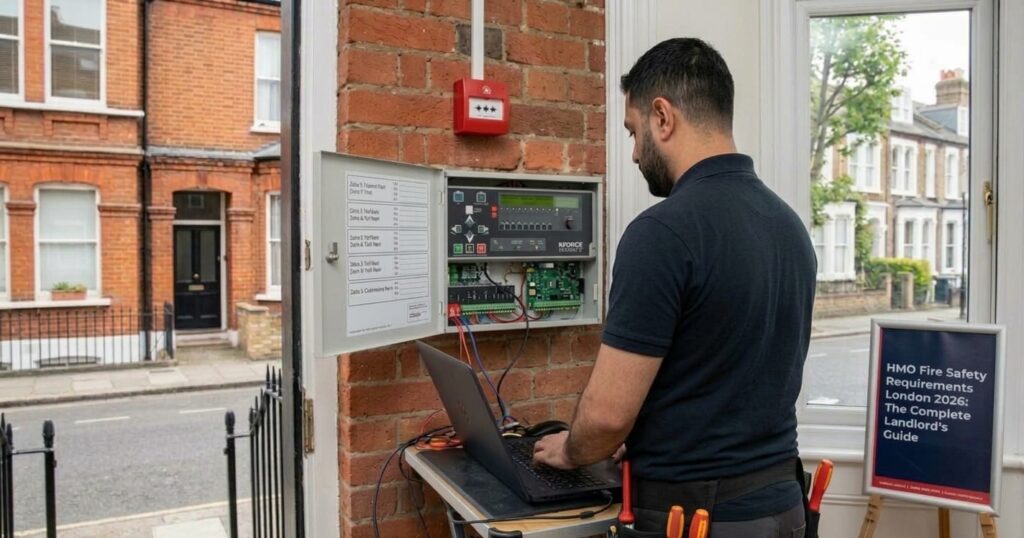
HMO property fire alarm panel installed by KForce Security engineer in London
Blog

HMO Fire Safety Requirements London 2026: The Complete Landlord’s Guide

HMO Fire Safety Requirements London 2026: The Complete Landlord’s Guide If you own or manage a House in Multiple Occupation in London, fire safety is not something you can leave until your next licence renewal. It is a legal obligation that applies right now — and the consequences of getting it wrong range from heavy fines and licence revocation all the way to criminal prosecution. Yet every week KForce Security visits HMO properties across London where landlords are genuinely unaware of exactly what the law requires, what systems they need, or how far behind their property actually is. This guide covers everything you need to know about HMO fire safety requirements in London for 2026 — the legislation, the specific equipment required, what a fire risk assessment involves, and what happens if you do not comply. If you manage an HMO and are unsure whether your property meets current standards, read this guide in full. Then call us. What Is an HMO and Does Your Property Qualify? A House in Multiple Occupation is defined under the Housing Act 2004 as a property occupied by three or more people who form more than one household and share facilities such as a kitchen or bathroom. In practice, this covers a very wide range of properties including: Converted houses split into bedsits or individual letting rooms Student accommodation with shared common areas Properties occupied by three or more professional sharers who are not related to each other Purpose-built blocks of flats that meet the HMO definition under local authority licensing criteria Mandatory HMO licensing applies to properties occupied by five or more people forming two or more households. However, many London boroughs — including Waltham Forest, Hackney, Newham, Tower Hamlets and others — operate Additional Licensing schemes that extend HMO licensing requirements to smaller properties, sometimes covering properties occupied by as few as two households. If you are unsure whether your property qualifies as a licensable HMO under your borough’s specific rules, contact your local authority housing department. Ignorance of your licensing obligations is not a defence in enforcement proceedings. The Legal Framework for HMO Fire Safety HMO fire safety in London is governed by several overlapping pieces of legislation. Understanding which applies to your property is the first step to compliance. The Housing Act 2004 gives local authorities the power to inspect HMOs and enforce fire safety standards through the Housing Health and Safety Rating System (HHSRS). Fire is classified as a Category 1 hazard under HHSRS — the most serious category — meaning local authorities have a duty to act where a serious fire risk is identified. The Regulatory Reform (Fire Safety) Order 2005 (RRO) applies to the common parts of HMOs — shared hallways, stairwells, kitchens and communal living areas. The responsible person (typically the landlord or managing agent) must carry out a fire risk assessment and put appropriate fire precautions in place for these areas. The Smoke and Carbon Monoxide Alarm (England) Regulations 2022 require landlords to install at least one smoke alarm on every storey of the property used as living accommodation, and a carbon monoxide alarm in any room with a fixed combustion appliance. These must be in working order at the start of every tenancy. The Management of Houses in Multiple Occupation (England) Regulations 2006 impose specific duties on HMO managers regarding fire safety, including maintaining escape routes, ensuring fire doors function correctly, and keeping fire safety equipment in working order. BS 5839-6:2019 is the British Standard covering fire detection and alarm systems in domestic premises including HMOs. It specifies the Grade and Category of system appropriate for different types of property. What Fire Alarm System Does an HMO Actually Need? This is the question KForce Security is asked most often by London landlords — and the answer is more specific than most people expect. Under BS 5839-6 and the associated guidance from the National Fire Chiefs Council, the required system depends on the size and configuration of the HMO. Smaller HMOs (Up to Two Storeys, Fewer Than Five Occupants) For smaller HMOs, a Grade D, LD2 system is typically the minimum required. This consists of: Mains-powered smoke alarms with battery backup in all hallways and landings (the escape route) Heat alarm in the kitchen All alarms interlinked — when one triggers, all sound simultaneously Interlinked alarms are essential in an HMO because occupants in separate rooms need to be alerted regardless of where the fire starts. Standalone, battery-only alarms are not sufficient for most HMO properties. Larger HMOs (Three or More Storeys, or Five or More Occupants) Larger HMOs typically require a Grade A, LD2 or LD1 system — a mains-powered, panel-based fire alarm system with: A dedicated fire alarm control panel Interlinked detectors in all escape routes (corridors, stairwells, landings) Heat detectors in kitchens Smoke detectors in all bedrooms and communal living areas (for LD1 — full coverage) Alarm sounders audible throughout the entire property Weekly test facility and logbook This is a professionally installed, panel-based system rather than domestic smoke alarms — and it must be installed and commissioned by a competent engineer to BS 5839 standards. What About Properties in Between? The exact requirement for your property depends on its layout, number of storeys, number of letting rooms, means of escape, and the outcome of a fire risk assessment. KForce Security carries out free site surveys and will tell you exactly what system your property needs before you commit to any work. Fire Risk Assessment — Who Needs One and What Does It Cover? Every HMO in London with common areas is required to have a fire risk assessment under the Regulatory Reform (Fire Safety) Order 2005. This is not optional and it is not a one-off document — it must be reviewed regularly and updated whenever significant changes are made to the property or its occupancy. A competent fire risk assessment for an HMO covers: Identification of fire hazards — sources of ignition, fuel, and oxygen throughout the property Evaluation
Blog

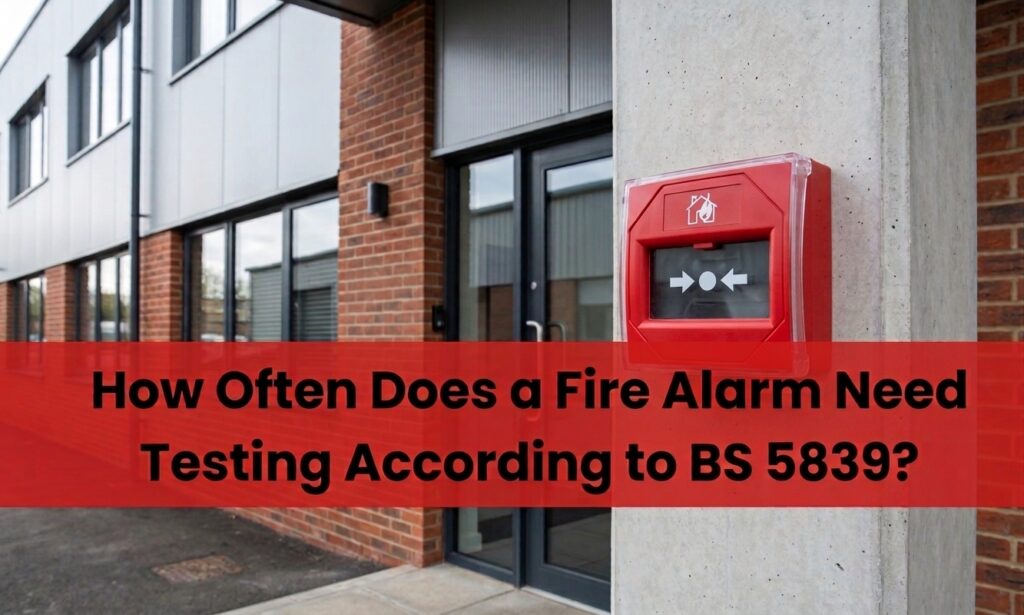
How often does fire alarm need testing according to BS 5839?

How Often Does a Fire Alarm Need Testing According to BS 5839? Fire alarm systems save lives — but only when they are working correctly. Installing a fire alarm is just the first step. Without regular testing and professional maintenance, even the most advanced system can fail silently, leaving your building and its occupants completely unprotected. As a BAFE-certified fire alarm installer serving businesses and landlords across London, KForce Security is asked the same question after almost every installation: how often does a fire alarm need to be tested? This guide gives you the complete answer — covering weekly testing duties, professional servicing intervals, logbook requirements, and what to do when a fault appears — all based on BS 5839, the British Standard for fire detection and alarm systems. What Is BS 5839? BS 5839 is the series of British Standards that governs fire detection and fire alarm systems in UK buildings. It covers everything from system design and installation through to commissioning, testing, and ongoing maintenance. The two most relevant parts for property owners and landlords in London are: BS 5839-1 — fire detection and alarm systems in non-domestic premises (commercial buildings, offices, shops, HMOs, schools, care homes, warehouses) BS 5839-6 — fire alarm systems in domestic premises (individual flats, houses, and residential dwellings) If you own or manage a commercial property, an HMO, or a block of flats with common areas, BS 5839-1 is the standard that applies to your fire alarm system. Your fire alarm installer should design, commission, and maintain your system in accordance with this standard. Fire Alarm Testing Schedule at a Glance Testing Type Who Carries It Out Frequency Manual call point test Responsible person / designated staff member Weekly Full system inspection and service Competent fire alarm engineer Every 6 months Additional interim checks Responsible person As needed Full system audit Competent engineer Following major building works or occupancy changes Weekly Fire Alarm Testing — Your Responsibility Under BS 5839-1, the responsible person for the building — typically the building owner, employer, or managing agent — is required to carry out a weekly fire alarm test. This is not a box-ticking exercise. Weekly tests serve a critical purpose: they confirm that the fire alarm control panel can receive an alarm signal and activate all connected alarm outputs correctly. They also help building occupants recognise the sound of the alarm before an emergency, and identify faults between professional service visits. How to Carry Out a Weekly Fire Alarm Test Notify your alarm monitoring centre (if your system is monitored) before starting the test to avoid an unnecessary emergency response Select a manual call point — use a different one each week so all call points are tested in rotation across the building Operate the call point using the test key provided with your system Confirm the control panel registers the alarm — the correct zone light should illuminate Confirm all alarm sounders activate throughout the building Check for any fault or warning indicators on the panel Restore the system and notify your monitoring centre that the test is complete Record the test in your fire alarm logbook — date, time, call point used, any observations, and your signature If the panel does not register the alarm, sounders do not activate in all areas, or any fault indicator is showing — contact a competent engineer immediately. Do not ignore a failed test. Six-Monthly Professional Fire Alarm Servicing Weekly testing by a responsible person does not replace professional inspection and servicing by a competent fire alarm engineer. These are two entirely separate requirements. BS 5839-1 recommends that fire alarm systems in non-domestic premises are inspected and serviced by a competent person at approximately six-month intervals. For most businesses and managed properties, this means two professional service visits per year. What a KForce Service Visit Includes When our BAFE-certified engineers carry out a six-monthly service, we inspect and test the full system including: Fire alarm control panel — visual inspection, fault review, battery and power supply test All manual call points — tested individually and inspected for damage or obstruction All detectors — smoke, heat, and multi-sensor detectors tested using appropriate test equipment All alarm sounders and visual alarm devices — checked for correct operation and audibility Monitoring and communication links — tested where applicable System interfaces — door release mechanisms, sprinkler interfaces, ventilation shut-off Logbook review — previous faults, false alarms, and outstanding remedial work reviewed Remedial recommendations — written report provided after every visit After every service we provide a full written service report and update your logbook. You receive documented proof that your system has been professionally maintained — essential for fire authority inspections, insurance purposes, and demonstrating compliance with the Regulatory Reform (Fire Safety) Order 2005. Why Six-Monthly Servicing Matters — Not Just Annual Many building owners assume an annual fire alarm service is sufficient. For most systems under BS 5839-1, it is not. Six-monthly servicing matters because: Detectors degrade — dust, humidity, and airborne contaminants accumulate inside detectors and reduce sensitivity over time. A detector that passes a test in January may be significantly less responsive by July. Buildings change — internal layout changes, partition walls, new furniture, or changes in occupancy affect whether your existing detector positions still give adequate coverage. A professional engineer will identify when a system needs updating. Batteries deteriorate — sealed lead-acid standby batteries typically have a 3–5 year lifespan. Six-monthly checks catch battery degradation before it causes a fault. False alarms increase — poorly maintained systems are more likely to generate false alarms, which can result in fines from the London Fire Brigade and desensitise occupants to the alarm signal. A single annual service is a risk. Two visits per year is the BS 5839-1 recommendation and what KForce Security recommends for all our clients. The Fire Alarm Logbook — What You Must Record Every building with a fire alarm system should maintain a fire alarm logbook. This is not optional — it is a

Blog

#Fire Alarm Requirements for Flats and Residential Blocks in London (2026 Guide)#

Fire Alarm Requirements for Flats and Residential Blocks in London (2026 Guide) If you own or manage a block of flats in London — whether it’s a converted Victorian terrace or a purpose-built residential development — getting the fire alarm right is not optional. It is a legal requirement, and getting it wrong can result in prosecution, fines, and most importantly, risk to life. This guide explains exactly what the law requires, what type of system you need, and how KForce Security can help you stay compliant and protected. Why Fire Alarm Systems in Flats Are Different A flat is not the same as a house or a commercial building, and the fire alarm rules reflect this. Each flat is a separate occupied unit, yet the building shares common areas — corridors, stairwells, plant rooms, and lobbies — that must also be protected. The key challenge is simultaneous independence and shared responsibility. Each resident needs to be alerted to a fire in their own flat, but the building also needs a system that protects shared escape routes and alerts all residents if a fire starts in the common areas. This is why fire alarm design for residential blocks in London requires specialist knowledge — a simple domestic smoke alarm from a hardware shop will not meet your legal obligations. What the Law Says Several pieces of legislation apply to flats and residential blocks in London: The Regulatory Reform (Fire Safety) Order 2005 (RRO) applies to all common parts of a residential building — corridors, stairwells, entrance lobbies, bin stores, and plant rooms. The “responsible person” (usually the freeholder, managing agent, or landlord) must carry out a fire risk assessment and implement adequate fire detection in these areas. The Fire Safety Act 2021 extended the RRO to cover the structure, external walls, and flat entrance doors of multi-occupancy residential buildings — meaning even more of the building now falls under the responsible person’s duty. The Building Safety Act 2022 introduced new duties for higher-risk residential buildings (those 18 metres or more in height, or with seven or more storeys). If your building falls into this category, you now have additional obligations around safety case reports and registration with the Building Safety Regulator. BS 5839-6:2019 is the British Standard that covers fire alarm systems in domestic premises, including flats. It defines the Grade and Category of system required depending on the building type and risk level. Your installer must follow this standard. What Type of Fire Alarm System Do Flats Need? BS 5839-6 categorises fire alarm systems for domestic premises by Grade (the technology used) and Category (the level of protection offered). For individual flats, the most common requirements are: For the common areas and shared parts of a residential block, a separate system is typically required — often a Grade A addressable or conventional fire alarm panel with detectors in corridors, stairwells, plant rooms, and bin stores. This system is distinct from the individual flat systems. For larger or higher-risk blocks, an L1 or L2 life protection system covering the full building may be required, including automatic detection throughout. The correct system for your building depends on its size, construction type, number of storeys, occupancy, and the outcome of a fire risk assessment. KForce Security will advise you on the right specification at no charge. Do You Need an Interlinked System? In many residential blocks, individual flat detectors must be interlinked — meaning if a detector triggers in one flat, the alarm sounds throughout the entire building or zone. This is particularly common in: Modern wireless interlinked systems make this much easier to achieve, especially in older buildings where running cables between flats would be disruptive and expensive. What Landlords and Managing Agents Must Do If you are responsible for a block of flats in London, here is a practical checklist of your obligations: Failure to comply can result in enforcement notices, unlimited fines, and in serious cases, prosecution. Addressable vs Conventional Systems for Residential Blocks For blocks with more than a handful of detection points in common areas, an addressable fire alarm system is strongly recommended. Here is why: With an addressable system, each detector and call point has a unique address. If a detector activates, the panel immediately tells you exactly which device triggered — for example, “Detector 14 — Third Floor Corridor.” This makes it far quicker for the fire service and building managers to locate the source of a fire. With a conventional system, detectors are grouped into zones, and the panel only tells you which zone triggered — not which individual detector. For smaller buildings with few devices, this is adequate. For larger blocks, it makes fault-finding and fire location much harder. KForce Security installs both conventional and addressable systems. We’ll recommend the right technology for your building after a free site survey. How Much Does a Fire Alarm System for Flats Cost? Every building is different, so costs vary. As a general guide for London residential blocks: Annual maintenance contracts for residential blocks start from around £250 per year depending on system size. Call us on 020 8638 6904 or book a free site survey online — we’ll give you a written quote within 24 hours of visiting your building. Why Choose KForce Security for Your Residential Block? KForce Security is a BAFE-certified fire alarm installer based in Leytonstone, East London. We specialise in fire alarm installation and maintenance for residential buildings across London, including: We carry out your fire risk assessment, design the right system for your building, install with minimal disruption to residents, and provide a full commissioning certificate so you have documented evidence of compliance. All our work is carried out to BS 5839 standards and we use leading brands including Apollo, Advanced, Fike, Hochiki, and C-TEC. We also offer ongoing maintenance contracts to keep your system compliant year after year. With over 75 five-star reviews from landlords, property managers, and building owners across London, you can book with confidence. Book

CCTV installation for small business London
Blog

CCTV Installation for Small Businesses in London 2026

If you run a small business in London, CCTV is no longer a luxury — it is one of the most cost-effective investments you can make to protect your premises, your staff, and your assets. This guide covers everything you need to know about CCTV installation for small businesses in 2026, including what type of system you need, how much it costs, and what the law says about using cameras in the workplace. Why Small Businesses Need CCTV According to the Federation of Small Businesses, small businesses in the UK suffer over 800,000 crimes per year. Yet many business owners still rely on basic alarm systems or no security at all. A modern CCTV system does far more than deter opportunistic theft: Deters shoplifting and break-ins — visible cameras reduce opportunistic crime significantly Protects staff — particularly important for lone workers or evening staff Provides evidence — HD footage is admissible in court and accepted by insurers Reduces insurance premiums — many commercial insurers offer discounts for businesses with monitored CCTV Remote monitoring — check your premises from your phone anywhere in the world Manages disputes — footage resolves customer and staff disputes quickly What Type of CCTV System Does a Small Business Need? The right system depends on the size of your premises and what you need to protect. Here are the most common setups KForce Security installs for small businesses across London: 1. HD IP Camera Systems (Most Popular) Internet Protocol (IP) cameras connect over your existing broadband network and offer the highest image quality available. They support remote viewing on any smartphone or tablet and can store footage in the cloud or on a local NVR (Network Video Recorder). Ideal for offices, retail units, restaurants, and warehouses. 2. Analogue HD CCTV A more affordable option for smaller premises. Analogue HD cameras offer excellent image quality at a lower cost per camera and are simpler to install. Suitable for small shops, salons, and single-room offices. 3. PTZ (Pan-Tilt-Zoom) Cameras For larger spaces like warehouses, car parks or yards, PTZ cameras can rotate and zoom to follow movement. One PTZ camera can cover an area that would otherwise require four fixed cameras. 4. Wireless CCTV Where running cables is not possible — in listed buildings, rented premises, or temporary sites — wireless IP cameras connect via WiFi. KForce Security uses commercial-grade wireless systems with encrypted connections for security. CCTV Laws for UK Businesses in 2026 Before installing cameras, you need to be aware of your legal obligations under UK data protection law (UK GDPR): Display signage — you must display clear signs telling people they are being recorded Register with the ICO — most businesses using CCTV must register with the Information Commissioner’s Office (registration costs £40-£60/year) Data retention — footage should generally not be kept longer than 31 days unless needed for an investigation Staff notification — employees must be informed that CCTV is in use in the workplace No filming in private areas — cameras must never be positioned to capture toilet facilities or changing rooms KForce Security provides a full compliance pack with every commercial CCTV installation, including signage, ICO registration guidance and a data retention policy template. How Much Does CCTV Installation Cost for a Small Business? Costs vary depending on the number of cameras, camera type, and whether you need a monitoring service. As a rough guide for London businesses: System Size Cameras Installed Cost Small shop or office 4 cameras £600 – £1,200 Medium retail or restaurant 8 cameras £1,200 – £2,200 Warehouse or large premises 16+ cameras £2,500 – £5,000+ These prices include supply, installation, NVR setup and remote viewing configuration. All KForce Security installations come with a 12-month workmanship warranty. Annual maintenance contracts start from £150 per year and include one engineer visit, system health check and priority response if issues arise. Remote Viewing — Watch Your Business From Anywhere One of the most valuable features of a modern CCTV system is remote access. KForce Security configures every IP camera system for remote viewing so you can: Watch live camera feeds from your smartphone at any time Review recorded footage from the last 30 days Receive motion alerts if movement is detected out of hours Share access with a manager or business partner This is particularly valuable for business owners who aren’t on site every day, multi-site operations, or anyone who travels frequently. Areas We Cover KForce Security installs CCTV systems for small businesses across all London boroughs including Hackney, Walthamstow, Ilford, Stratford, Forest Gate, East Ham, Tottenham, Barking, Romford, and the City of London. We offer free same-week site surveys across the whole of London. Get a Free CCTV Survey for Your Business If you’re considering CCTV for your business, the best starting point is a free site survey. Our engineers will assess your premises, identify the optimal camera positions, and provide a written quote with no obligation. 📞 Call us: 020 8638 6904📧 Email: sales@kforcesecurity.co.uk🌐 Book online: www.kforcesecurity.co.uk/contact-us/ We cover all London boroughs and offer same-week appointments for business clients. KForce Security is a BAFE certified fire and security company based in Leytonstone, East London. We install and maintain CCTV systems, fire alarms, intruder alarms and access control for businesses across London.

Fire Alarm Regulations for HMO Landlords in London
Blog

Fire Alarm Regulations for HMO Landlords in London 2026

If you own or manage a House in Multiple Occupation (HMO) in London, fire alarm compliance is not optional — it is a legal requirement. Failure to meet it can result in fines of up to £30,000, licence revocation, or criminal prosecution. This guide explains exactly what you need as an HMO landlord in 2026, which systems are required, and how KForce Security can help you stay fully compliant. What Is an HMO? A property is classified as an HMO if it is occupied by three or more people from two or more separate households who share facilities such as a kitchen or bathroom. This includes: Bedsits and shared houses Converted flats where the conversion does not meet the 1991 Building Regulations Properties above commercial premises Student accommodation If your property has five or more occupants across two or more households, it is a large HMO and requires a mandatory licence from your local council. Legal Requirements for HMO Fire Alarms in 2026 The Regulatory Reform (Fire Safety) Order 2005 All HMO landlords must carry out a fire risk assessment and take reasonable steps to reduce fire risk. This includes installing and maintaining appropriate fire detection systems. BS 5839-6 Standard Fire alarm systems in residential properties must comply with BS 5839-6:2019. For HMOs specifically, the required grade depends on the property size and layout: Property Type Minimum Grade Required Small HMO (up to 2 storeys) Grade D, Category LD2 Large HMO (3+ storeys) Grade A, Category LD1 HMO with common areas Grade A, Category LD1 Grade A systems require a mains-powered, interlinked fire alarm panel — the type a professional company like KForce Security installs and maintains. HMO Licensing Conditions To obtain or renew an HMO licence in any London borough, you must provide evidence that: A fire alarm system is installed and in working order A fire risk assessment has been completed within the last 12 months Fire doors are fitted to all high-risk rooms (kitchen, boiler room) Emergency lighting is in place in common areas (for larger HMOs) Fire extinguishers are accessible on each floor Common Mistakes HMO Landlords Make 1. Using battery-only smoke alarms Simple battery-operated alarms do not meet HMO requirements for Grade A systems. They must be mains-powered and interlinked so that when one triggers, all alarms in the property sound. 2. No regular servicing The law requires fire alarm systems to be tested weekly (by the occupant) and inspected by a competent engineer every six months. Many landlords overlook this, which invalidates insurance and breaches licence conditions. 3. Outdated fire risk assessments A fire risk assessment must be reviewed every year, or whenever there is a change to the property or its occupants. An assessment from 2022 or 2023 is no longer valid. 4. No fire doors Kitchen doors in HMOs must be FD30 fire doors (30-minute fire resistance). Many older properties have standard internal doors that do not meet this standard. What KForce Security Installs for HMO Landlords We specialise in fire alarm systems for HMOs across London. Our typical HMO installation includes: Addressable fire alarm panel — pinpoints exactly which detector has triggered Interlinked smoke and heat detectors in all bedrooms, corridors, kitchens and common areas Manual call points on each floor landing Sounder/strobe units so occupants with hearing impairments are alerted Emergency lighting in stairwells and corridors Six-month and annual maintenance contracts to keep you legally compliant We work with landlords across East London, including Hackney, Walthamstow, Ilford, Stratford, Forest Gate and surrounding areas. All installations comply with BS 5839, and we provide a full commissioning certificate for your HMO licence application. How Much Does HMO Fire Alarm Installation Cost? Every property is different, so we always carry out a free site survey before quoting. As a rough guide: Small HMO (3–4 bedrooms, Grade D): £400–£800 installed Medium HMO (5–6 bedrooms, Grade A): £800–£1,500 installed Large HMO or converted flat (Grade A, full panel): £1,500–£3,000 installed Annual maintenance contracts start from £150 per year and include two engineer visits and a compliance certificate. Book Your Free HMO Fire Safety Survey If you are unsure whether your property meets 2026 HMO fire alarm requirements, the safest step is to book a free site survey. Our engineers will assess your property, identify any gaps, and provide a written report with a no-obligation quote. 📞 Call us: 020 8638 6904 📧 Email: sales@kforcesecurity.co.uk 🌐 Book online: www.kforcesecurity.co.uk/contact-us/ We cover all London boroughs and offer same-week appointments. KForce Security is a BAFE certified fire and security company based in Leytonstone, East London. We install, maintain and service fire alarm systems, CCTV, intruder alarms and access control for residential and commercial properties across London.

Types of Fire Alarm Systems
Blog

Types of Fire Alarm Systems: A Comprehensive Guide

As a business owner, selecting the right fire alarm system requires understanding how tailored solutions match your needs. Every property, regardless of size, works differently to protect valuable assets. With various types of fire alarms available, you might feel overwhelmed. At Forbel, we simplify fire alarm systems by presenting clear options to help you make the best choice. Fire alarms are essential for protecting both lives and property during a fire emergency. These systems detect smoke, heat, or flames, then alert occupants to evacuate and notify emergency services. Understanding different types of fire alarm systems ensures the right one meets your needs. Understanding Fire Alarm System Categories Fire alarm systems can be categorized into two fundamental types based on how they operate and respond to fire threats. A manual fire alarm system must be manned and operated 24/7 by a person who alerts others manually via a pull station. An automatic fire alarm system is automatically triggered when fire or smoke is detected. The difference is clear: one relies on human supervision while the other responds independently. The Four Fire Detector Categories Before exploring complete system types, understanding the four main detector categories forms the foundation of fire detection technology decisions for your property. The four main categories include ionization, photoelectric, heat, and combined ionization/photoelectric detectors, each detecting fires uniquely. Ionization smoke detectors use a constant electrical current between electrically charged plates. When disrupted as smoke enters, this triggers an alarm signal, excelling at detecting fast-burning fires. Photoelectric smoke detectors use electricity to power a laser beam or light source that becomes scattered when encountering smoke, signaling the alarm to sound. Heat detectors signal an alarm when sensing temperature changes from flames, reducing false alarms from humidity or steam. Combined units merge both technologies using electrical current and light beam within one device for the fastest smoke detection capability. Conventional Fire Alarm Systems / Four-Wire System A conventional fire alarm system is one where devices and panels are hardwired individually to the fire alarm control panel. This system, also called a 4-wire system, is frequently used in smaller properties where the system divides space into different detection zones, each wired on a dedicated circuit to a control unit. When fire is detected, the panel shows which zone triggered the signal, though since devices share a zone, the exact location must be checked by a person. These affordable systems work well in shops and restaurants that rely on cost-effective solutions for small sites. How Four-Wire Systems Work In a four-wire alarm system, separate wires handle power and signalling, providing distinct circuits for reliable operation and clear panel communication. Devices like smoke detectors and manual pull stations connect to a fire alarm control panel. When activated, the system identifies the zone where the device is located, displaying this information on the fire panel. In a facility with four floors, each could be set up as a zone, allowing building managers and fire departments to determine which floor the fire is on. Best Applications and Key Considerations Four-wire systems suit small to medium-sized buildings, including schools, offices, and small commercial properties, where simplicity of installation and reliability remain crucial priorities. They’re reliable and simple with straightforward installation and maintenance, plus they’re cost-effective—less expensive than advanced systems. However, limited information means they cannot pinpoint exact alarm locations, and they require more wiring than two-wire systems, which can increase installation complexity and cost. Two-Wire Fire Alarm Systems A two-wire fire alarm is a standard conventional system utilizing a two-wire structure where call points, detectors, and alarm devices connect via two zone cables to a fire alarm control panel. This system offers flexibility and benefits, including detector recognition and isolation, making it ideal for smaller spaces requiring fast smoke detection. Two-wire systems work well in small to medium-sized buildings like small offices, retail stores, and residential buildings where simplicity and cost-effectiveness are priorities. With simpler wiring using fewer wires, installation becomes easier and less expensive with lower maintenance costs. Reduced wiring enables efficient power usage as devices share power through the same wires. However, limited scalability affects larger buildings, while lower flexibility means fewer options for customizing or expanding the system. Potential interference exists since shared wiring can cause signal interference between devices. Wireless Fire Alarm Systems A wireless system eliminates cables when connecting each detection device to the fire alarm panel. This system relies on multi-frequency links for heightened functionality while maintaining signal strength for constant protection, making it ideal for historic buildings and properties that don’t allow wiring. How Wireless Technology Works Wireless fire alarm systems use radio frequency technology to communicate between detectors, initiating devices, and the control panel, eliminating extensive physical wiring needs. These systems are ideal for buildings where running wires is difficult or impossible, such as historical buildings, temporary structures, and large commercial properties with complex layouts. Advantages and Disadvantages Flexible installation means no wiring is needed, so installation becomes faster and less invasive. They’re scalable and easy to expand by adding more detectors, reducing labor costs related to wiring during installation. However, signal interference means radio signals can be affected by certain building materials, and wireless devices have battery dependency requiring regular maintenance and replacement. The higher initial cost reflects that equipment is typically more expensive than wired systems. Analogue-Addressable Fire Alarm Systems By definition, an addressable fire alarm system is an intelligent system where components connect to each other and a control unit. Unlike conventional systems that only share a detected fire’s zone, analog-addressable systems send a signal from the specific detector that sensed smoke. This specificity makes the system reliable for large commercial properties needing specific identification of where a fire occurred, allowing responders to quickly locate the zone. The system doesn’t require as much cabling as conventional ones since each detector has a unique address sending its signal directly when fire, heat, or smoke is found. How Addressable Systems Provide Precise Location Data An addressable fire alarm system assigns a unique address to each device,

False Fire Alarms
Blog

False Fire Alarms: Causes & Prevention

False fire alarms pose a significant challenge in maintaining safety and efficiency across workplaces and public spaces. The common causes include system malfunctions, human error, and environmental factors that act as triggers—ranging from smoke during cooking to technical issues like sensor malfunctions and improper system maintenance.  Implementing effective prevention strategies helps businesses and public institutions reduce occurrences by addressing root causes, ensuring a safer environment while preserving integrity and trust in fire alarm systems. Expert advice and tailored solutions work to mitigate these concerns, making systems essential for keeping your home or business safe. When signals disrupt business operations, you lose money and drain fire response team resources, forcing the fire department to respond to non-emergencies instead of a real emergency. These constant interruptions become a huge inconvenience when systems aren’t working correctly, creating situations you must avoid to prevent headaches for everyone involved. The Different Types of Fire Alarm Systems Understanding the diverse range of fire alarm systems helps businesses and institutions choose the most appropriate solution, as each type has distinct characteristics that influence the likelihood of false alarms. Conventional Fire Alarm Systems Conventional fire alarm systems feature simpler design elements but are more prone to triggering false alarms due to their less sophisticated detection capabilities. These systems divide buildings into zones, making it harder to pinpoint exact locations during emergencies compared to modern alternatives. Addressable Fire Alarm Systems Addressable systems provide more precise information about the location and nature of each alarm, effectively reducing the chances of false alerts through enhanced monitoring capabilities. Each device has a unique address, allowing fire alarm system controllers to identify specific problem areas instantly and accurately. Wireless Fire Alarm Systems Wireless systems offer flexibility and ease of installation but require regular maintenance to ensure reliability over time. Professional knowledge of various systems enables providers to provide tailored solutions, helping organizations select and maintain systems that minimize risk while enhancing safety and efficiency in any setting.  This is where fire alarm installation system expertise becomes crucial to ensure every component functions effectively. Understanding the Scale of the Problem Fire accidents rank among the worst incidents—truly scary situations that demand immediate attention. According to the Home Office’s online Incident Recording System (IRS), fire and rescue services (FRSs) in England attended approximately 153,957 fire incidents during the year ending March 2020. Shockingly, 42% incidents were reported as caused by false triggers—a huge percentage of false incidents that highlights why we must focus on real fires requiring attention and reduce the number of unnecessary calls. These disruptions affect peace of mind throughout the community and divert the attention of responders from genuine emergencies. To minimise these occurrences, understanding how smoke detectors and alarms work becomes crucial for both residential and commercial properties. Regular fire risk assessment also plays a key role in identifying vulnerabilities that lead to false triggers. Causes of  False Fire Alarms Here are some causes of a fire alarm system.  System Malfunction and Technical Malfunctions in Alarm Systems System malfunction represents one of the most common causes of false alarms, often because your fire alarm is malfunctioning due to internal workings that are aging and need replacement. Most detectors should be replaced every 10 to 15 years, though waiting for the recommended replacement time isn’t necessary when components start to fail and trigger unwanted alerts. Technical malfunctions in alarm systems emerge as another common cause, with issues like faulty wiring, aging components, and software glitches causing the system to mistakenly identify a fire condition.  The importance of regular, thorough maintenance cannot be overstated to prevent these technical issues. I always recommend establishing routine inspections to ensure proper functioning through checking for wiring issues, replacing old, worn-out components, and updating system software. A well-maintained fire alarm installation system is less likely to experience failures, reducing chances of disruptions. Professional expertise in identifying and rectifying problems proves invaluable for businesses and institutions committed to keeping systems in optimal condition through regular technical maintenance, helping entities significantly reduce the occurrence while ensuring safer, more efficient operation. Environmental Factors Contributing to False Alarms, Smoke Detector Activation, Steam and Aerosol Sprays Environmental factors play a crucial role in causing false alarms—dust, steam, and even insects can inadvertently trigger fire alarm sensors, leading to false alerts. High humidity from kitchens and bathrooms often results in smoke detectors misinterpreting conditions as signs of fire, while dust accumulation on sensor surfaces can obstruct normal functionality. I advise conducting regular environmental assessments to identify and mitigate these factors, ensuring detectors aren’t placed near problem areas, and implementing regular cleaning schedules to keep sensor areas dust-free.  Professional teams recommend using appropriate types of detectors in environments prone to specific conditions—like heat detectors instead of smoke sensors in cooking areas. Managing these variables effectively can greatly reduce occurrence rates, creating more reliable fire protection systems. Things like cooking fumes and cigarette smoke can falsely activate sensors, making it essential that building occupants know the location of devices when dealing with smoke from cooking or otherwise.  A fire professional should inspect overly sensitive units to ensure they’re working properly. Additional triggers include aerosol sprays like deodorants and hair sprays, candles, and cooking fumes detected by a detector in an adjacent area—for example, when a unit located in a corridor outside a kitchen can cause it to go off from burnt food. Dirty detectors that aren’t frequently cleaned and serviced compound these problems significantly. Human Error and Accidental Triggers Human error significantly contributes to false fire alarms, resulting from accidental or careless actions I’ve observed countless times—burning toast, smoking indoors, or misusing fire alarm systems can lead to unintended alarms. These incidents cause disruption and contribute to a complacent attitude that becomes dangerous during actual emergencies. To combat this, I emphasize the importance of education and training for staff and occupants in businesses and public institutions. Awareness campaigns about proper use and the consequences of false triggers play a key role in reducing incidents.  Clear instructions and signage help people avoid common mistakes that

Fire Alarm Control Panels
Blog

Fire Alarm Control Panels: Types, Features, and How to Choose

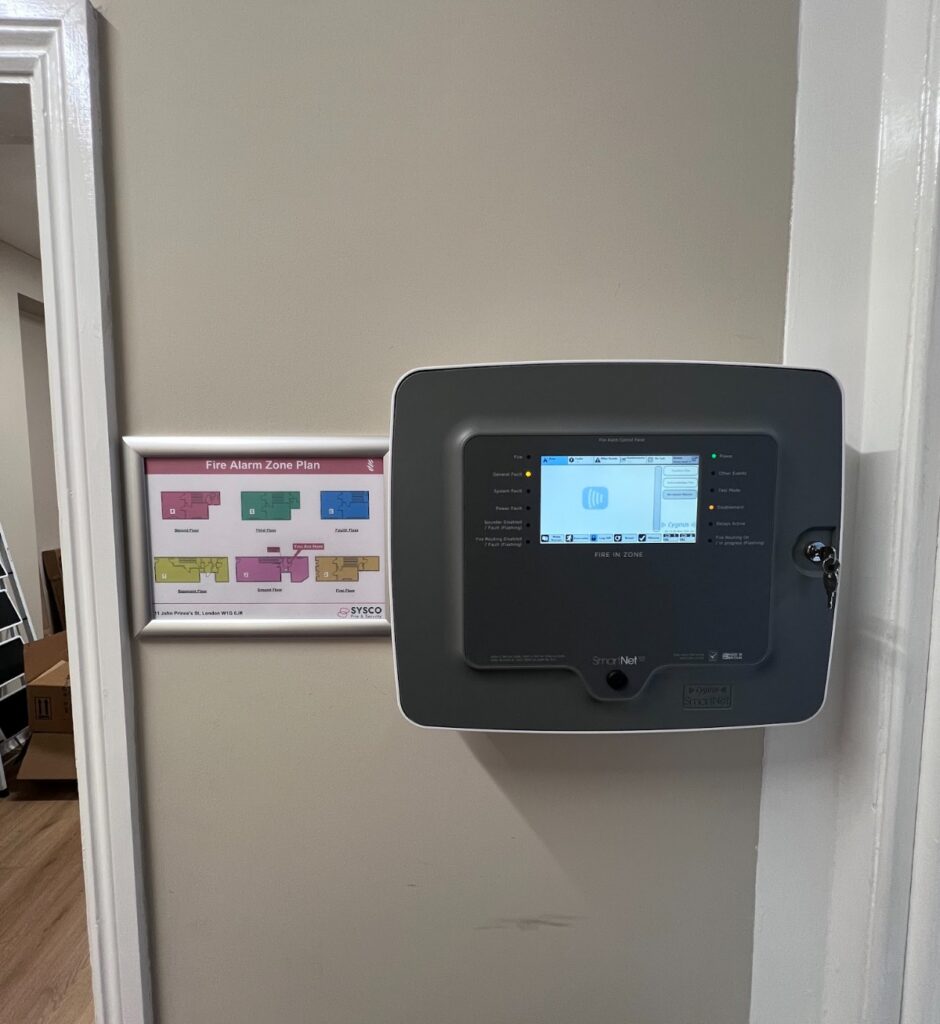
Over the years, working with building managers and facility owners, I’ve seen how Fire Alarm Control Panels serve as the true brains of fire alarm systems. The FACP acts as a central hub protecting against loss of life and property damage during emergencies. From modern office building setups to industrial facility installations, every fire safety system depends on receiving and initiating proper alarm response through accurate signal processing.  Today’s systems integrate smoke detectors, heat sensors, and alarm devices to detect fire quickly and accurately, while ELV (Extra Low Voltage environments enable seamless connections with surveillance, access control, and public address systems. Real-time monitoring provides alerts that enhance operational efficiency within any building automation system, ensuring emergency responders can act fast when every second counts. Meeting compliance with safety regulations while implementing modern fire prevention systems has become essential for fire protection, as these advanced technology solutions spot fires early, activate alarms, communicate with emergency teams, and ultimately safeguard lives through coordinated efforts. What is a Fire Alarm Control Panel? A Fire Alarm Control Panel (FACP) manages every aspect of a fire alarm system by integrating devices and indicators, including smoke detectors, heat detectors, and manual pull stations. When potential effects are assessed, suitable actions like sounding alarms or contacting dispatchers occur through this command center that monitors fire detection devices, triggers alarms, and communicates alerts throughout the building.  Detection Monitoring continuously scans smoke, heat, and flame detectors across multiple zones, while Alarm Activation initiates audible alarms, visual alarms, and digital alarms. System Communication sends alerts to local fire services or centralized monitoring stations, and Health Monitoring tracks the status of wiring, power supply, and panel integrity. Integration with electrical systems like CCTV, access control, HVAC, and building automation systems ensures quick response and coordinated safety measures. Components of a Fire Alarm Control Panel Every fire alarm control panel contains key components that work together to detect fire, trigger alarms, and ensure reliable communication during emergencies. Control Module The Control Module Processes signals from detectors and triggers alarms instantly. This central hub monitors all fire detection devices, evaluates potential fire threats, and initiates suitable actions like sounding alarms or contacting dispatchers for rapid response.as part of the fire alarm installation system. Detection Devices Detectors are Devices that sense smoke, heat, flames, or a combination of hazards throughout the building. These smoke detectors and heat detectors continuously scan multiple zones, providing early-stage warnings to prevent loss of life and property damage. Notification Devices Notification Devices like Sirens, strobes, bells, speakers, and voice systems warn occupants immediately. These alarm-triggering devices deliver audible alarm signals and visual notification signals, such as flashing strobe lights, to alert people on premises of potential danger for safe evacuation. Power Supply and Backup Power Supply and Backup through Main AC power, with battery backup, keeps systems running during outages. This ensures the device maintains operational equipment functionality, providing electricity continuously even during an electricity disruption to guarantee system reliability under all fire conditions. User Interface User interfaces via Keypads or touchscreens enable monitoring and programming for facility managers. This display shows Alarms, faults, and routine maintenance messages, allowing operators to configure and test the system while tracking panel integrity and overall Health Monitoring. Communication Interfaces Communication Interfaces Links to emergency services, monitoring stations, or cloud platforms for real-time monitoring. These System Communication channels send alerts to local fire services or centralized monitoring stations, ensuring emergency responders receive immediate notifications through secure wireless networks for coordinated safety measures. Types of Fire Alarm Control Panels Fire alarm panels are designed to meet various building requirements, from simple offices to complex industrial environments, each offering distinct detection capabilities and scalability. Conventional Fire Alarm Panels Conventional Fire Alarm Panels divide a building into zones where each zone has multiple detectors on the same circuit. When a detector senses smoke or heat, the panel identifies which zone the alarm came from, but not the exact detector. Features include Zone-based detection with Simple wiring and basic monitoring of detectors. Applications cover Small offices, shops, and warehouses, or Buildings where pinpointing the exact location isn’t critical.  Advantages are being cost-effective and easy to install and maintain, while disadvantages include Limited information on which device triggered the alarm and being less scalable for large buildings. A 3-story office using a conventional panel with one zone per floor means that if smoke is detected on the second floor, the panel tells the floor, but not the exact room. Addressable Fire Alarm Panels Addressable Fire Alarm Panels assign a unique address to every detector and device, allowing the panel to identify exactly which device triggered alarm. Features include device-specific detection, Advanced diagnostics (like battery status and wiring faults), and ability to integrate with smart building systems. Applications are Large commercial buildings, Hospitals, airports, hotels, and Facilities with complex layouts.  Advantages include Pinpoints exact location of fire or fault, being Scalable for multi-story buildings, and supporting integration with ELV systems and building automation, though disadvantages show a Higher cost than conventional panels and Requires trained personnel for programming. In a hospital, an addressable panel identifies that a smoke detector in Room 204 triggered an alarm, enabling a targeted response without evacuating the entire floor unnecessarily. Hybrid Fire Alarm Panels Hybrid Fire Alarm Panels combine conventional features and addressable features, allowing buildings to use zone-based wiring and smart addressable devices in the same system. Features include flexible system configuration, Supports both older conventional devices and new addressable devices, and can be upgraded in phases. Applications are Buildings transitioning from conventional systems to addressable systems and Mixed-use buildings requiring flexible monitoring.  Advantages are being flexible and adaptable, can save costs during phased upgrades, though disadvantages include More complex programming than purely conventional systems and Slightly higher cost. A commercial building with an older conventional system can integrate addressable smoke detectors in high-risk areas like server rooms or kitchens while keeping conventional detectors elsewhere. Intelligent Fire Alarm Panels Intelligent Fire Alarm Panels are advanced FACPs that use data analysis and smart

Fire Safety Compliance
Blog

Warehouses Fire Safety Compliance Checklist

Fire in a warehouse can destroy everything in minutes. Every year, warehouse fires cause millions of dollars in damage. Workers get hurt. Businesses shut down. But here’s the good news: most warehouse fires can be stopped before they start. Between 2009-2013, an estimated 1,210 warehouse structure fires were reported to U.S. fire departments annually, causing three civilian deaths, 19 civilian injuries, and $155 million in direct property damage, according to the National Fire Protection Association (NFPA). Understanding local warehouse fire safety regulations, NFPA standards, and OSHA requirements helps minimize fire threats in your warehouse. This comprehensive checklist offers an easy-to-follow guide to reduce fire risk, keep people safe, and mitigate property loss. Fire Safety Training and Staff Preparation Proper training of staff is key—everyone must understand how each procedure works and remain aware of fire risks they can control. Keep fire safety training documents readily available and hold annual fire safety training for all employees. Train new hires immediately upon arrival. Appoint fire watch employees and evacuation managers who stay behind to shut down critical equipment. Practice fire and emergency evacuation drills regularly. Ensure all staff undertake a Level 1 Fire Safety course available online at their convenience. Designated fire marshals or wardens should be equipped with a Level 2 Fire Safety award to properly implement fire procedures. All staff must know where fire equipment and extinguishers are located and establish a clear evacuation plan. Make sure employees are aware of different materials they’re handling, knowing which type of extinguisher to use in the event of a fire. Fire Equipment and Safety Measures Installing and maintaining the right fire safety equipment is crucial for protecting your warehouse from potential disasters. Here are the essential components to keep your facility compliant and safe. Fire Suppression Systems and Sprinklers Install the right fire suppression systems and sprinkler systems for your warehouse. Inspect and maintain these systems to assure they work when needed. Your water system must have adequate capacity and pressure to support sprinklers effectively. Maintain 18 inches of open space below sprinkler heads and suppression nozzles—24 inches below ceiling when there are no sprinklers. ESFR sprinklers require 36 inches clearance. Fire Extinguishers and Equipment All fire extinguishers must be accounted for and inspected per NFPA 10 standards, with nothing hanging from fire sprinkler or suppression systems lines, heads, or nozzles. Keep fully-charged, undamaged fire extinguishers readily available everywhere, and teach employees how to use them properly. Fire pump riser rooms should remain empty with nothing stored inside. Exits, Evacuation Routes, and Emergency Procedures All exits, aisles, evacuation routes, and fire alarm pull stations must stay unblocked at all times. Verify exit signs and evacuation lights remain fully operational. Any dead-end aisles should be properly noted and cannot exceed 50 feet in length. Keep fire doors, exits, equipment, and safety notices completely unobstructed. All emergency exits must be clearly marked with emergency signage, featuring adequate lighting and remaining unobstructed so employees can evacuate safely in case of fire. Proper lighting and emergency signs remain essential for guiding individuals during evacuation. Material Handling and Storage Configurations Proper storage configuration and material handling practices are vital for preventing fire spread and maintaining safe operations throughout your warehouse. Racking and Flue Space Requirements Maintain 3 inches space on the sides of pallets for transverse space, with 6 inches longitudinal flue space between loads in back-to-back rows. Throughout your warehouse, ensure racked pallets have 3 inches of transverse flue space on each side. This rack space beside each side of every racked pallet allows proper airflow. In standard pallet rack configuration with 3 inches pallet overhang, rows of racks should be 12 inches apart. Aisle Width and Equipment Usage For manual restocking, maintain a minimum unobstructed aisle width of 24 inches or half aisle width—whichever is greater. For mechanical restocking, keep an unobstructed aisle of 44 inches. When using automated material handling equipment like carousels or ASRS, follow additional code requirements to prevent equipment’s motion from spreading fire. Overloaded pallet racking can cause damage to the entire system and pose serious fire hazard as stock will burn in more condensed space. Always stick to racking weight limits—never overload. Display racking weight limit notices on all racking systems. Flammable Materials and Hazardous Chemicals Store all flammable and combustible liquids in approved safety cabinets per OSHA 1926, NFPA 30, and local Authorities Having Jurisdiction (AHJ) guidelines. All chemicals must be stored according to their classifications and regulatory standards to minimize health risks. Proper labeling with signal words, pictograms, hazard statements, and precautionary statements remains essential for hazard communication. Any employees handling hazardous chemicals must be provided with proper PPE and thorough training. Employers must maintain and regularly update Safety Data Sheets (SDSs) to inform users about hazards associated with specific chemicals. Conduct regular fire risk assessment sessions to identify areas where combustible materials may pose an increased hazard. Inventory Assessment and Risk Management Assessing inventory regularly helps reduce risk of fire and can assist firefighters if they respond. Take note of high-risk areas where flammable material is stored in abundance, implementing special fire prevention procedures with additional safeguards like enhanced sprinkler system coverage, strategically placed fire extinguishers, and sensitive alarms in these areas. After recent warehouse fire incidents involving gas cylinders stored on site, stored cylinders have higher chances of catching fire. Risk is reduced when stored off-site in a designated gas cylinder cage. Review your inventory regularly, ensuring machinery remains properly maintained—this proves essential for staying compliant and preventing fires. Waste Management and Debris Removal Clear all debris, discarded packing materials, trash, and other flammable items into proper waste bins—allow nothing accumulating where it shouldn’t. To prevent an abundance of rubbish from becoming hazardous, ensure all waste is stored in bins outside site where they won’t become a target for arsonists or vandals. Keep rubbish bins and skips stored in a cordoned off area positioned away from main buildings. Install security lighting around these areas. Keep empty bins when possible, reducing amount of waste produced in

Fingerprint vs Face Recognition
Blog

Fingerprint vs Face Recognition: Which Access Control Is Better

Security has become a top priority for homes, offices, and businesses in London. Traditional keys and PIN codes no longer protect modern properties effectively. The shift toward biometric access control systems reflects growing concerns about sensitive areas in government, healthcare offices, data centers, and logistics hubs. Physical credentials like electronic keys, swipe cards, and access cards are easily compromised—they get lost, stolen, or shared among individuals. Biometric verification changes everything by linking access control management directly to unique physical traits, eliminating user behavior risk while addressing data privacy needs through proper infrastructure upgrades. What Is a Biometric Access Control System  A biometric access control system uses human traits like fingerprints and facial features to grant access without keys or PINs. Simply scan your finger or face at a door access machine, and you’re in. These biometric security systems rely on physical characteristics, including iris patterns, to verify identity with higher accuracy than traditional keys. From residential homes and villas to commercial office buildings, warehouses, factories, hospitals, and schools, the growing demand across the UAE proves that biometric fingerprint access control and face recognition systems deliver security, convenience, and flexibility for daily operations while preventing unauthorized access in smart office solutions. Alongside biometric systems, integrating fire alarm installation and intruder alarm system setups ensures complete safety and protection from both internal and external threats. Fingerprint Access Control Systems Fingerprint systems scan the unique ridges and patterns on a person’s finger, capturing microscopic details where ridges start, end, or split. The system instantly compares the live scan against a stored template in its database, grants access when it finds a match, and logs the access attempt for audit purposes. Advantages Limitations Face Recognition Access Control Systems Face recognition systems use cameras to scan facial features, employing advanced AI and 3D mapping to analyze the distance between eyes, jawline, and nose shape. AI-powered algorithms instantly compare the live image with stored data, recognize individuals in seconds, and grant access for authorized users. Advantages Limitations Fingerprint vs Face Recognition: Key Differences Understanding the core distinctions between fingerprint and face recognition helps organizations choose the right biometric access control system based on security requirements, budget, and user experience priorities. Accuracy & Reliability Fingerprint verification remains accurate but can fail with dirty or injured fingers, while face recognition proves very advanced yet gets affected by lighting conditions. Both biometric methods deliver high accuracy when properly calibrated, though hand conditions and environmental factors impact performance differently across system control access scenarios. Speed & Convenience Fingerprint scanning is quick but requires touch, creating brief delays at access points. Face recognition operates faster and is completely contactless, enabling seamless, hands-free entry for employees moving through high-traffic areas. The touchless nature makes facial verification significantly more convenient for large teams during peak hours, eliminating physical interaction entirely. Hygiene & User Experience Fingerprint systems demand physical contact, making them less hygienic in shared environments and public spaces where multiple users touch the same scanner. Face recognition remains contactless and safer for public use, addressing hygiene factor concerns that became critical post-COVID-19. This touchless access significantly improves the user experience in modern offices. Cost & Installation Fingerprint devices are more affordable and suitable for small offices and homes, offering cost-effective solutions for budget-friendly deployments. Face recognition demands higher investment initially, but it proves scalable for enterprises and corporate offices across London, Abu Dhabi, and Sharjah. Installation complexity and ongoing maintenance costs differ substantially between the two biometric security systems. When planning installations, it’s wise to conduct a fire risk assessment to ensure the system complements overall safety protocols, including fire alarm installation and fire extinguisher placement. Security Level Both systems are inherently secure, relying on unique biological traits that are difficult to forge or misuse. Combining both fingerprint and face recognition creates an even stronger biometric access control system through multi-factor authentication. High-security environments like banking facilities, data centers, and restricted areas benefit from hybrid approaches that ensure maximum protection against unauthorized access. Integration with intruder alarm system technology further enhances protection against physical breaches. Which Biometric Access Control System Is Better  The best option depends on your property type and needs. For residential properties and small businesses, fingerprint access control remains budget-friendly and reliable. Corporate offices in high-traffic areas across London and London benefit from face recognition that offers speed and a touchless experience. High-security environments require a hybrid system using both fingerprint and face recognition to ensure maximum protection.  When planning access control system installation in London, match the solution to your security requirements, considering office environment, employee size, and whether hygiene or affordability takes priority—smaller offices suit fingerprint systems while cost-sensitive businesses appreciate proven reliability over innovation. Conclusion Both fingerprint and face recognition access control systems redefine how we secure our spaces, offering accuracy, convenience, and peace of mind. Fingerprint systems suit smaller offices or homes with limited budgets, while face recognition provides touchless, high-speed access ideal for larger organizations.  The right choice depends on your environment, hygiene preferences, and security needs. To discover the best biometric access control solution for your property, contact us today and let our experts help you upgrade your security with confidence.

Call Now Button